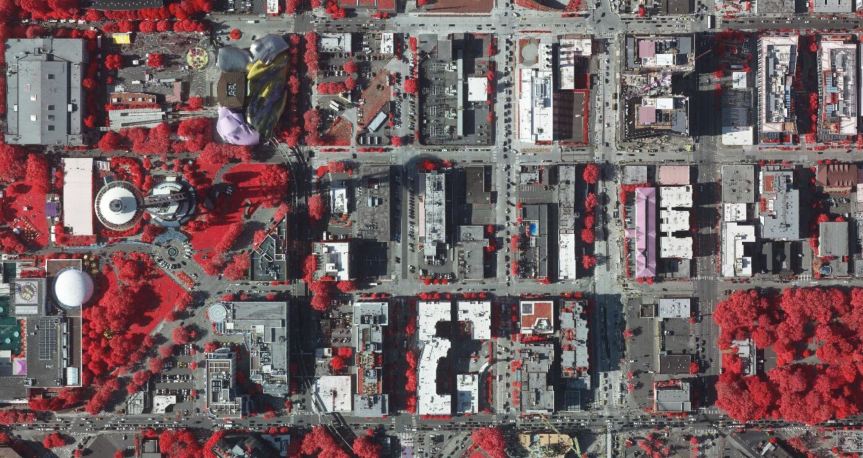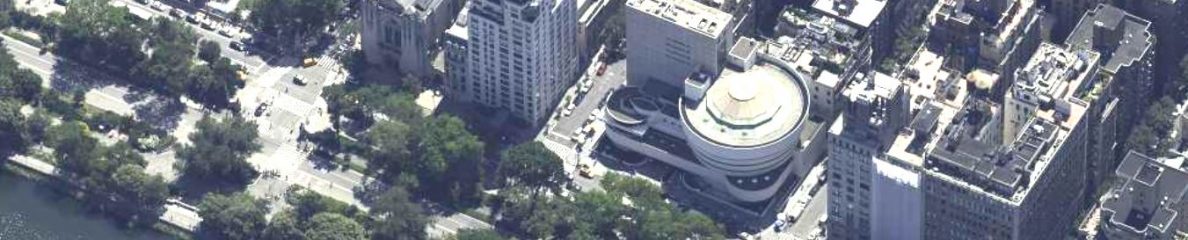
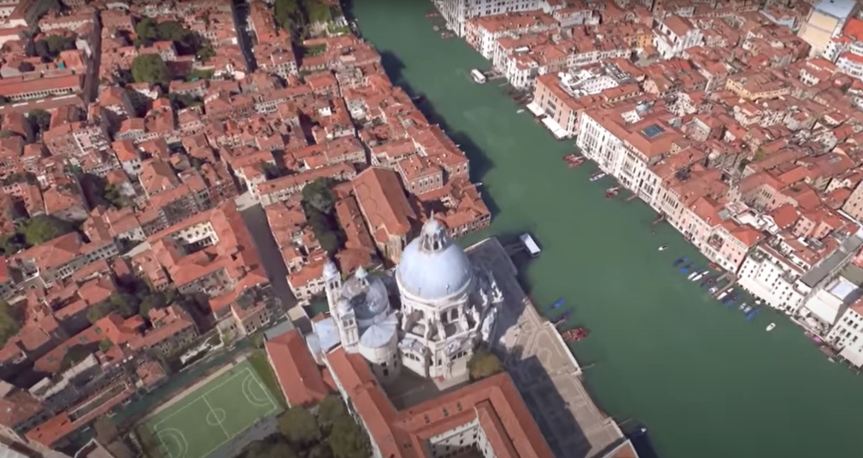
Oblique Imagery and Bing Maps.

Here’s a brief look at Bing Maps and the history of geospatial technologies at Microsoft from Encarta Atlas and TerraServer through to Virtual Earth and the freshly released Flight Sim. The Bing Maps team have been pioneers, innovating so many great features over the years like hybrid maps and birds eye, many of which contributed to the creation of Flight Sims environment. As mentioned in the video, aerial imagery is a big differentiator, especially oblique angled imagery, when applied to texturing buildings and other structures.

There’s a nice tip near the end of the video; fire up the Windows 10 Maps app and go into 3d mode to experience much of the same environment as Flight Sim. And here’s my additional tip for added thrill – plug in a USB XBOX controller and fly around effortlessly. Why is this app so hard to find in Windows?

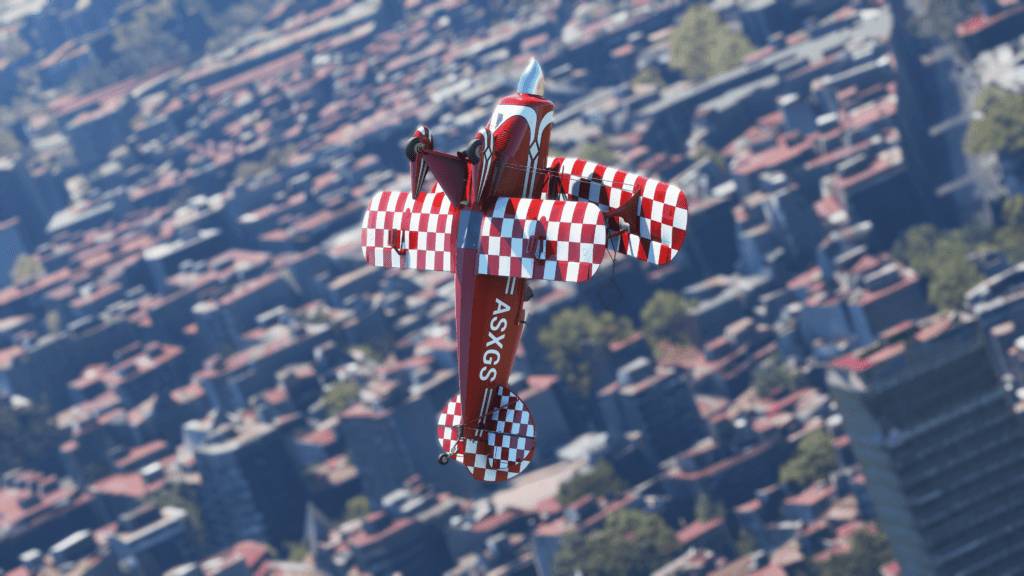
Microsoft Flight Simulator is back!

It’s been over a decade since the last version was released, but Microsoft’s Flight Simulator is back and looks incredible! Here is a detailed hands on review at Techcrunch. The trailer has me wanting to call it a day and go install.

Vexcel gets a shout out in this in depth overview at Protocol for providing imagery and data products used to help create the real-world simulation. The heavy-lift engineering that goes into a product like this is staggering.

The algorithms and data — including OpenStreetMap — were then fed into Microsoft’s vast Azure computing cloud to generate Flight’s 2.5-petabyte model, which includes 2 trillion trees, 1.5 billion buildings (you can probably find your house), 117 million lakes and just about every road, mountain, city and airport on the planet.

Protocol

Iowa Tornado Imagery and Damage Heat Map

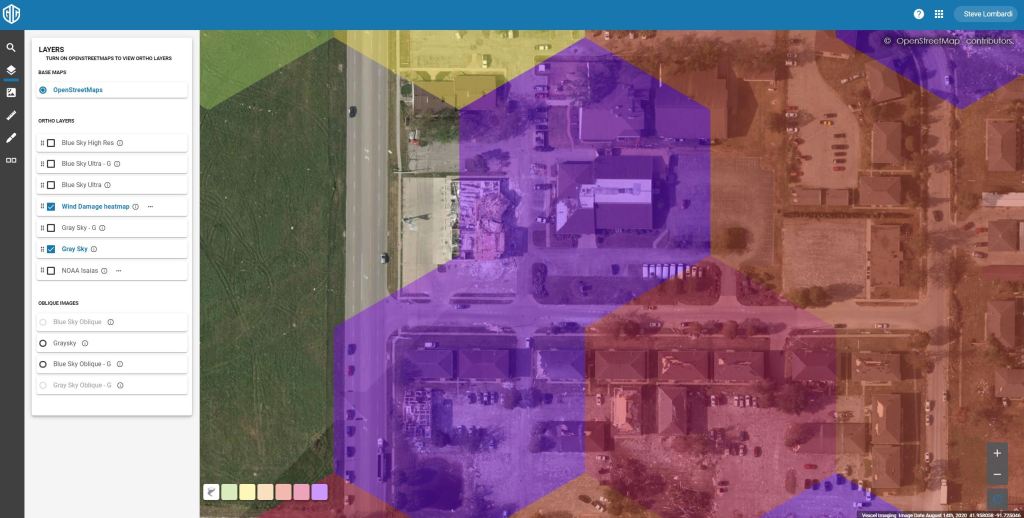
Yesterday GIC responded to the midwest derecho catastrophe collecting imagery over Cedar Rapids, Iowa. this Imagery is now available on the Vexcel Platform as well as via our ArcGIS services. Additionally, through our partnership with the Labs at Munich Re, an AI generated heat map of the wind damage is included. After each hurricane or tornado event that we collect, the Munich Re team runs the imagery through their computer vision system trained on wind damage, scoring each building structure in the affected region on a zero to five scale, considering factors like roof damage, downed trees and blue tarps.

The result is an interactive color-coded hex map that reveals more detail at each zoom level. After a cat event like this tornado in Iowa, it makes it easy for insurers to overlay their PIF and focus immediately on the hardest hit areas. In the image above we have 4 violet cells at the center, indicating the most severe damage. As we zoom in on this area more detail unfolds until we reach street level to inspect the individual properties.

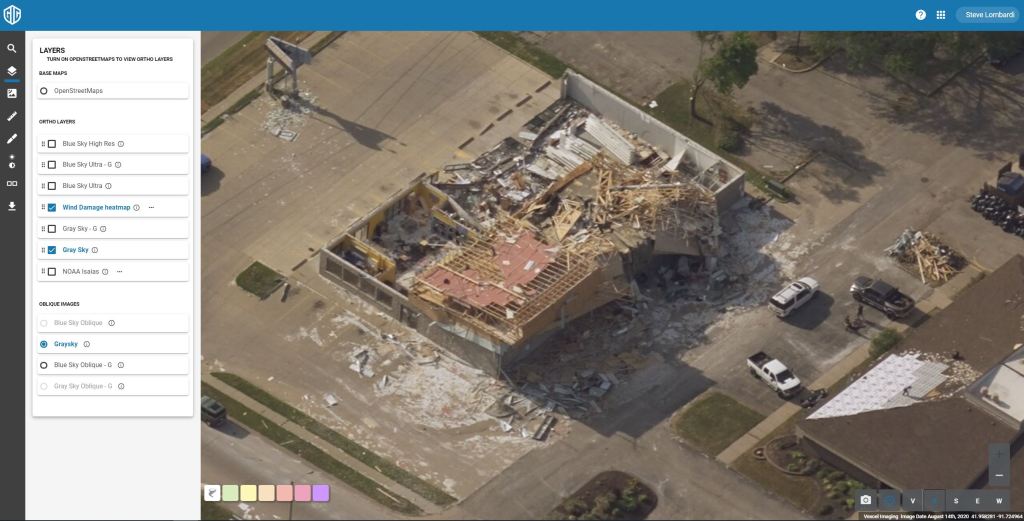
and of course down at street level, you can toggle on our oblique imagery to continue inspecting the damage with our 360 degree view of each property in the region.

Trevi Fountain in Rome

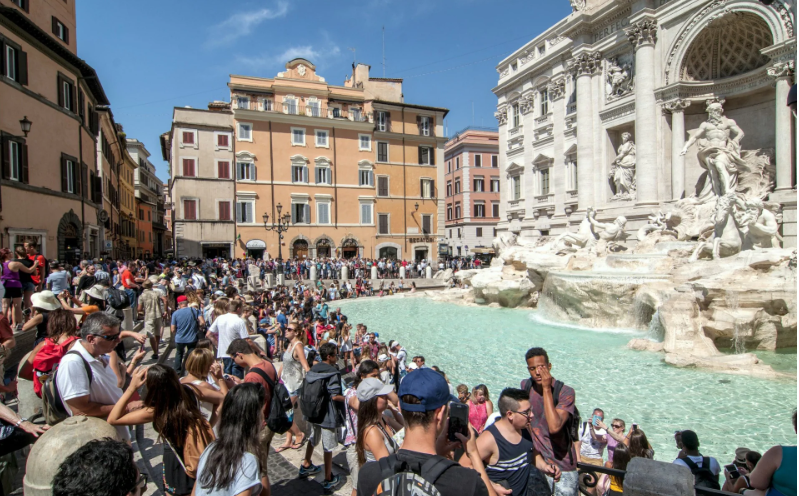
The Trevi Fountain was completed in 1762 and has been packed with tourists seeking selfies throwing a coin over their shoulder every day since.

In fact, the day Anita Ekberg and Marcello Mastroianni danced in the fountain in La Dolce Vita is the only time the square has been without people since.

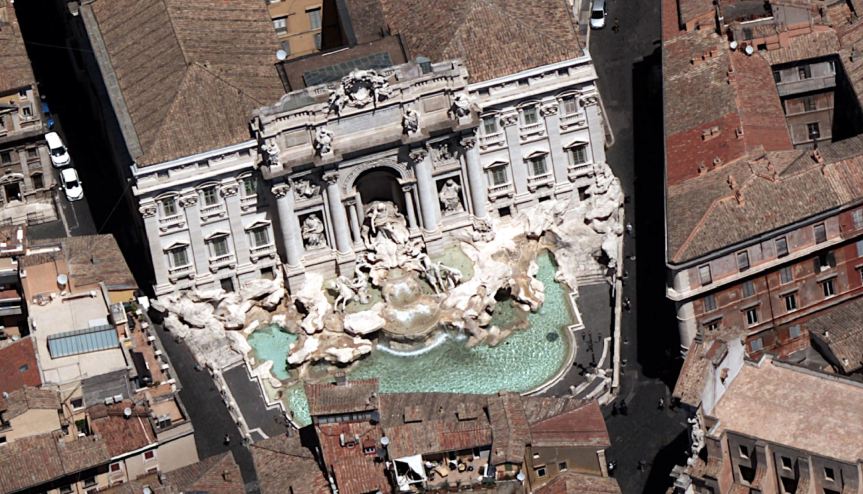
This stunning image of the fountain from the sky was captured in May in the midst of a city-wide quarantine in response to the early surge of Coronavirus that hit Italy. As a nation, they’ve done well to flatten the curve and I look forward to returning to Tevi Fountain for some delicious gelato someday soon.

Vexcel API v1.1 is released

This week we launched v1.1 of the Vexcel API. Among the dozens of bug fixes and minor improvements is one very big feature; the ability to access near-infrared (NIR) imagery via API. Until now NIR was available for direct download from cloud storage. Access to NIR just became a lot easier to integrate into your applications and workflows with these API enhancements.

There are two important API enhancements making it easy to work with NIR

  • ‘rendering’ parameter on FindImage, FindImagesInPoint, and FindImagesInPolygon methods. When requesting metadata with any of the ‘Find’ methods, you can now easily filter to return only near infrared imagery. Values for this new parameter include all, rgb, and nir. Read more in the docs here.
  • ExtractNIRImages service. this new service is very similar to ExtractImages which returns true colored imagery. All of the usual parameters you would expect to see are here; filter by date, specify location as a point or polygon, image size etc…. The full documentation for this method is here.

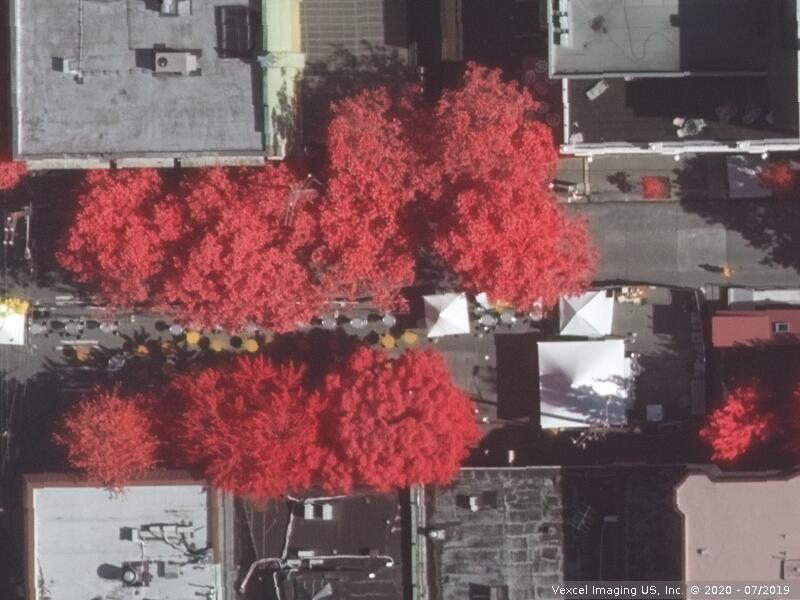
Lets look at how to use these two methods together. We’ll use 47.6141,-122.319 as our target location.

Start by calling FindImagesInPoint to see what Near infrared imagery is available here. We’ll limit the layers to just the 7.5cm blue sky layers and using the ‘rendering’ parameter, we will request that only nir images be returned.
https://api.gic.org/metadata/FindImagesInPoint?layer=bluesky-ultra,bluesky-ultra-g&rendering=nir&format=json&EPSG=4326&orientation=all&wkt=POINT(-122.319+47.6141)&AuthToken=[YOURTOKENHERE]

You can then parse the resulting JSON and select the image you want to request. Use the ExtractNIRImages method to do so:
https://api.gic.org/images/ExtractNIRImages/bluesky-ultra?mode=one&logo=yes&imagename=2019~us-wa-seattle-2019~nadir~44738-lvl02-color_ir&EPSG=4326&xcoordinate=-122.319&ycoordinate=47.6141&zoom=0&width=800&height=600&AuthToken=%5BYOURTOKENHERE%5D

The result will be an image like this:

If you have questions as you get started head over to the support center and let us know

Quarantine Captures; Aerial imagery in Covid times.

The global spread of Covid-19 has affected us in many ways, including how we work, socialize and learn. everyone among us has been affected in some way by the pandemic. As we have continued our mission to fly and collect imagery it was odd to see the affect on cities worldwide in various stages of quarantine. Metropolitan streets devoid of cars. Famous landmarks and tourist attractions without people.

We’ll be featuring some of these images here on The Ground Truth blog in the coming weeks. Just look for posts tagged QuarantineCaptures.

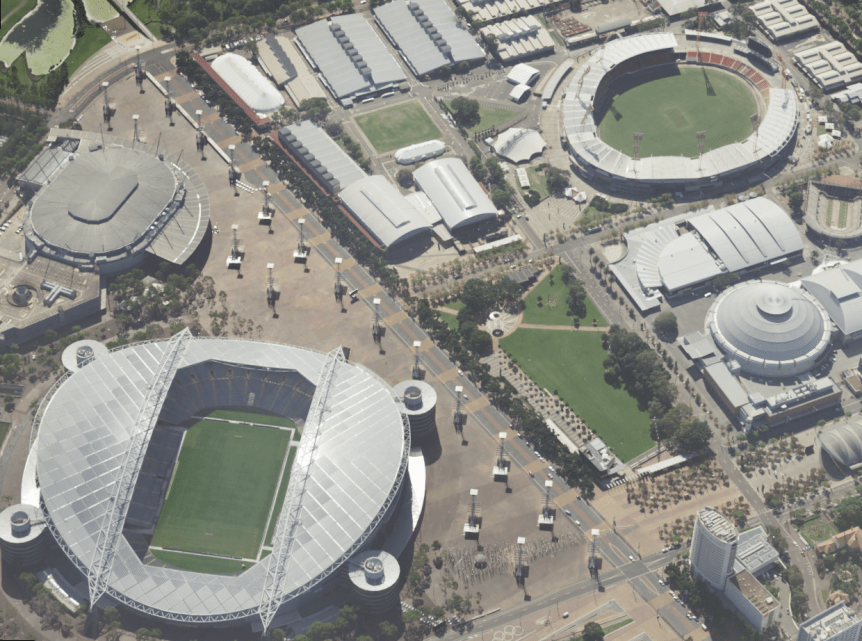
Getting things started, here’s Sydney Olympic Park photographed April 14, 2020

Hurricane Isaias Imagery is now available

Over 5000 square kilometers of imagery taken in the wake of Hurricane Isaias are now availible on our platform. Already in use by first responders and the insurance industry, it’s nice to be able to get your job done with fewer boots on the ground. As Rob Carroll, Vexcel VP of government solutions said –

Virtual inspection tools like these are a must-have when disasters and pandemics collide. Enabling social distancing through powerful, timely geospatial data.

Here are the areas of interest we covered for this Hurricane:

  • North Myrtle Beach, SC-Sunset Beach, NC
  • Norfolk, VA 
  • Middletown, DE
  • Suffolk, VA
  • Strathmere-Marmora-Ocean City, NJ
  • Hampton-Newport News, VA
  • Bristol, CT 
  • Bridgeport, CT
  • Hamden, CT
  • Hartford-East Hartford, CT
  • Milford, CT
  • New Haven, CT